

 JOIN US LIVE on WEDNESDAY Nights at 8p est on Patreon
 CLICK https://www.patreon.com/c/CopTalkTRUTH
Legislation introduced in the Illinois House of Representatives would significantly change how members of the public and news organizations obtain police body-camera footage, dashboard-camera recordings and other law enforcement records through the Illinois Freedom of Information Act (FOIA).
House Bill 5733, sponsored by Democratic State Representative Daniel Didech, proposes additional exemptions for certain police records, longer response deadlines for public agencies receiving large numbers of FOIA requests, and new labor-based charges for processing audio and video records.
The legislation specifies an effective date of January 1, 2027, if enacted. As of November 16, 2026, the bill has not become law and remains assigned to the Illinois House Rules Committee.
Subscribe on YouTube and join thousands of officers, attorneys, and citizens who follow Cop Talk TRUHT for fact-based analysis, interviews and more—not headlines.
▶ Subscribe Here: https://www.youtube.com/@CopTalkTRUTH

What Is Illinois House Bill 5733?
HB 5733 was filed on March 24, 2026, and received its first reading on March 25. It was referred to the House Rules Committee that same day.
The bill proposes amendments to several provisions of the Illinois Freedom of Information Act, including Sections 2.15, 3, 6, 7 and 7.5.
According to the legislation’s official synopsis, the proposed amendments address four principal areas:
-
Exemptions for specified law enforcement recordings and records.
-
Extended FOIA response deadlines for public bodies receiving more than 1,000 requests annually.
-
New fees for processing electronically stored audio and video.
-
Additional protections for certain criminal history, threat assessment and personal information records.
The changes would affect how public agencies process and respond to certain records requests, including requests submitted by journalists, researchers and private citizens.

If you’ve ever felt like you’re doing “all the right things” and still not seeing the scale budge, you’re not alone—and it’s maddening. Fat loss can feel like a constant battle against your own body: you cut calories, add workouts, skip desserts, and somehow… nothing changes. The good news is that the problem usually isn’t your effort. It’s that most approaches focus on quick fixes instead of the handful of principles that make results sustainable. CLICK HERE to learn more! https://www.nutritionconnectionbalance.com/sustainable-fat-loss-beyond-the-scale/
Proposed Restrictions on Police Body-Camera and Dashboard-Camera Footage
One of the bill’s provisions would exempt law enforcement in-car camera recordings and officer-worn body-camera video or audio that one public body receives from another public body.
Under the proposed language, a government agency receiving recordings from another government agency would be able to withhold those records under the new exemption.
The provision is specifically directed at recordings transferred between public bodies. It does not establish a blanket prohibition on obtaining every police body-camera or dashboard-camera recording directly from the agency that originally created it.
However, it would create an additional exemption affecting recordings held by multiple government agencies.
For example, when police recordings are transferred to another agency for investigative or administrative purposes, the receiving agency’s copies could fall within the proposed exemption.
Whether an original recording remains available from the originating agency would depend on the applicable disclosure laws and any other exemptions.
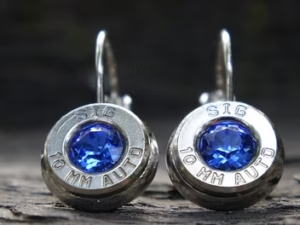

Discover the artistry of RedGlareUSA, a veteran-owned business crafting the most creative and unique items from spent bullet cases adorned with stunning Swarovski Crystals. Each piece is a testament to innovation, precision, and creative excellence—transforming ammunition into wearable art and collectible treasures all hand made in the USA! CLICK HERE to shop and support! https://redglareusa.com/
Police Video Requests Could Take 30 Business Days
HB 5733 would also establish a different response deadline for certain public bodies receiving requests for video records.
Under the current general FOIA framework, public bodies ordinarily must respond to noncommercial requests within five business days, subject to legally permitted extensions and exceptions.
The proposed legislation creates two response periods based on the number of FOIA requests an agency received during the previous year.
| Annual FOIA requests received | Proposed initial response deadline |
|---|---|
| 1,000 or fewer | 5 business days |
| More than 1,000 | 30 business days |
For qualifying agencies receiving more than 1,000 annual requests, the bill would also permit an extension of up to 10 additional business days for specified statutory reasons.
This means certain video requests could have a statutory response period of up to 40 business days, approximately eight calendar weeks, depending on weekends and holidays.
Importantly, the statutory deadline concerns the agency’s obligation to respond, which can include complying with or denying a request. It does not guarantee that footage will be released by that date.
The proposed longer deadlines would not apply to every police department or every FOIA request. The 30-business-day provision specifically concerns requests involving video records submitted to public bodies exceeding the annual request threshold.
Listen to “Cop Talk TRUTH #003 – Pot Brothers at Law” on Spreaker.
New Fees Could Increase the Cost of Obtaining Police Recordings
Another significant provision of HB 5733 would authorize public bodies to charge labor-related fees for processing electronically stored audio and video requests.
Currently, Illinois FOIA generally prohibits charging ordinary noncommercial requesters for the labor involved in searching for and reviewing electronic records, subject to statutory exceptions.
Under HB 5733, public agencies would be permitted to charge for staff time exceeding the first 60 minutes spent preparing a response.
The bill specifically identifies research, locating records, collecting files, reviewing recordings and redacting protected information as activities that can contribute to preparation time.
Rather than allowing agencies to charge the hourly rate of whichever employee performs the work, the bill would base the charge on the lowest-paid employee in a position responsible for that work.
It would also permit an additional amount equal to 50% of that employee’s hourly wage to account for fringe benefits, limited to actual benefit costs.
Charges would be calculated in 15-minute increments.
The legislation does not establish a single statewide dollar amount or a fixed maximum total fee for every video request. Consequently, the cost would depend on the agency’s applicable wage rate and the amount of preparation time required.
CLICK HERE to get your copy of

How Much Could a Police Video FOIA Request Cost?
The following examples illustrate potential charges under the bill’s proposed formula. They are hypothetical calculations, not fees documented as having been imposed by any Illinois police department.
| Total staff time | Example rate, including benefits | Potential charge after first free hour |
|---|---|---|
| 3 hours | $30/hour | $60 |
| 10 hours | $30/hour | $270 |
| 20 hours | $30/hour | $570 |
| 40 hours | $30/hour | $1,170 |
For requests involving substantial footage, extensive redactions or multiple recordings, labor-related charges could exceed $1,000 under these illustrative assumptions.
However, the legislation also includes several procedural requirements and exemptions.
Public bodies intending to charge preparation fees would have to provide an estimated number of personnel hours and the applicable hourly wage within 10 business days after receiving the request. The requester would then have 10 business days to decide whether to proceed.
The bill exempts qualifying crime victims requesting recordings of themselves, as well as specified family members or legal guardians requesting recordings involving a deceased person.
Existing FOIA provisions regarding public-interest fee waivers and reductions would also remain relevant.
Additional Records That Would Become Exempt
HB 5733 proposes several other categories of records that would be exempt from public inspection or copying.
These include:
-
Records concerning the work of a law enforcement agency’s threat assessment team, including its procedures, findings and recommendations.
-
Criminal history records covered by the proposed exemption.
-
Personal and private information submitted to and maintained by the Illinois State Police under the Criminal Identification Act.
-
Law enforcement body-camera and in-car camera audio or video received from another public body.
The proposal would expand statutory grounds for denying access to these categories of information.
Other laws and disclosure requirements may continue to govern records in these categories independently of FOIA.
How HB 5733 Relates to Existing Illinois Body-Camera Law
Illinois already regulates public access to police body-camera recordings through the Law Enforcement Officer-Worn Body Camera Act, codified at 50 ILCS 706/10-20.
Under that law, body-camera recordings are not automatically available through FOIA in every circumstance.
Certain recordings involving complaints, arrests, detentions, police uses of force, firearm discharges, deaths or bodily harm may qualify for disclosure, subject to the law’s privacy provisions and other applicable requirements.
The law also establishes retention requirements for recordings, including circumstances requiring flagged recordings to be preserved beyond the ordinary retention period.
HB 5733 does not repeal the existing body-camera disclosure framework. Instead, it would add restrictions concerning recordings transferred between public bodies while changing certain FOIA processing deadlines and fees.
The distinction is important because the proposal would modify access to specified recordings rather than categorically eliminate public access to all police video.
Potential Implications for Public Access and Police Accountability
Police body-camera and dashboard-camera recordings can provide documentary evidence of interactions between officers and members of the public.
Such recordings may be relevant to investigations involving police uses of force, complaints of misconduct, arrests, traffic stops and disputes over the circumstances of an encounter.
If enacted, HB 5733 could affect public access to that evidence in several ways.
For qualifying agencies, the longer statutory response periods would allow additional time before a video request must be answered. The proposed fee structure could increase the cost of obtaining recordings that require substantial preparation, while the additional exemptions could permit withholding certain records currently not covered by those specific exemptions.
The effects would depend on the agency involved, the type of recording requested, the applicable disclosure laws and the amount of processing necessary.
The legislation does not authorize law enforcement agencies to alter recordings, fabricate evidence or disregard applicable legal disclosure requirements.
The bill’s text establishes proposed exemptions, deadlines and fee procedures. It does not establish that any agency has used those provisions to conceal misconduct.
Current Status: Where Does HB 5733 Stand?
As of November 16, 2026, the official Illinois General Assembly legislative record identifies the most recent action on HB 5733 as its referral to the House Rules Committee on March 25, 2026.
No subsequent committee approval, House passage, Senate passage or gubernatorial approval appears in the official bill history reviewed for this article.
The Illinois House and Senate are scheduled to convene for the fall veto session on November 17, 18 and 19, 2026.
Although the bill could potentially advance during the remaining legislative session, there is no confirmed committee hearing or floor vote for HB 5733 reflected in the official bill history as of publication.
The proposed January 1, 2027, effective date is contingent on the legislation becoming law. The filing of a bill does not itself change existing FOIA requirements.

From SWAT Officer to Legal Advocate: Protecting Those Who Protect Us – Bridget Truxillo built her career on patrol, in narcotics, and on a SWAT team before she picked up a law degree. Now Lady Law Shield represents law enforcement officers and first responders against the agencies that were supposed to have their backs. CLICK HERE to sign up for the Lady Law Shield Internal Affairs Checklist: https://ladylawshield.com/internal-affairs?utm_source=broadcast&utm_medium=email&utm_campaign=ia-q4-2026&utm_content=launch#ia-get-pdf
Frequently Asked Questions
Will Illinois eliminate public access to police body-camera footage on January 1, 2027?
Not under current law as a result of HB 5733. The bill remains pending, and its introduced language does not eliminate access to every police body-camera recording.
Would every Illinois police department have 30 business days to respond to video requests?
No. Under the proposal, the 30-business-day response period would apply to public bodies receiving more than 1,000 FOIA requests during the preceding year. Other qualifying requests would generally retain the five-business-day initial deadline.
Could police departments charge citizens to obtain body-camera recordings?
If HB 5733 becomes law, qualifying agencies could impose labor-related charges for electronically stored audio and video requests requiring more than 60 minutes of preparation, subject to specified exemptions and fee procedures.
Would journalists be exempt from the proposed fees?
The bill does not establish a general exemption for all journalists. Existing provisions allowing public-interest fee waivers or reductions would remain relevant, and qualifying news-media requests may receive consideration under those provisions.
Has HB 5733 passed the Illinois legislature?
No. As of November 16, 2026, the official record continues to identify the bill as assigned to the House Rules Committee.
When would the changes take effect?
January 1, 2027, is the effective date stated in the introduced legislation, if enacted.
Sources and Official Legislative Records
1. Illinois General Assembly — HB 5733 legislative status. Official sponsorship, introduction dates, committee assignment and legislative actions.
2. Illinois General Assembly — Full text of HB 5733. Proposed FOIA exemptions, response deadlines, preparation fees and effective date.
3. Illinois Law Enforcement Officer-Worn Body Camera Act — 50 ILCS 706/10-20. Existing recording retention and public disclosure requirements.
4. Illinois House of Representatives — November 2026 veto session calendar. Official scheduled legislative session dates.
About The Author

Discover more from Cop Talk TRUTH
Subscribe to get the latest posts sent to your email.


